
• A
  • A
  • A
  • ABC
  • ABC
  • ABC
  • А
  • А
  • А
  • А
  • А
Regular version of the site
Article
What we do in the shadows of the pear tree: Tense switching in Shughni Pear Stories

Melenchenko M.

Indo-Iranian Languages. 2026. Vol. 2. No. 1. P. 74-99.

Book chapter
West Circassian scalar ‘only’ in a typology of focus marking
In press

Lander Y., Bagirokova I., Lander A.

In bk.: Theoretical Issues in the Languages of the Caucasus. Amsterdam: John Benjamins, 2026.

Working paper
You shall know a piece by the company it keeps. Chess plays as a data for word2vec models

Orekhov B.

arxiv.org. Computer Science. Cornell University, 2024

News

"The linguistics program at HSE is very strong"

"The linguistics program at HSE is very strong"
Dirk Geeraerts, a professor at the University of Leuven, talks about the advantages of linguistiс training at the Higher School of Econimics, the high level of interaction demonstrated by the students at the School of Linguistics, and the potential upcoming convergence of fundamental and applied linguistic research.

‘Our Students Were Able to See that HSE is a Real Research University’

Tilmann Reuther, Professor at the University of Klagenfurt, and his colleague Joulia Köstenbaumer talk to the HSE News Service about their experience of cooperation with the School of Linguistics and internships in Austria.

Python, Non-Indo-European Languages and Sociolinguistics: What You can Learn at the New HSE’s Master’s Programme

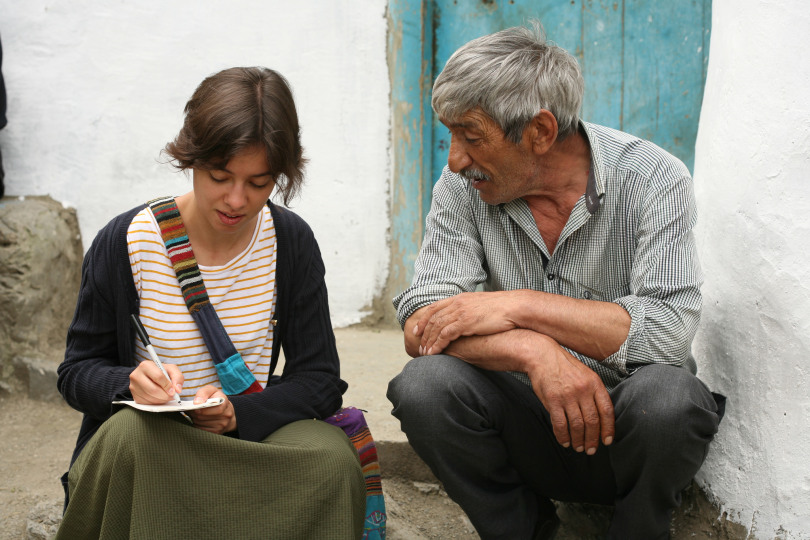
School of Linguistics’ expedition to Dagestan
This year HSE has launched a new English-taught MA programme ‘Linguistic Theory and Language Description’, which has evolved from a specialization on the Computer Linguistics programme. Michael Daniel, one of the programme’s Academic Supervisors, told the HSE news service about the multilingual people who will study here, the expeditions the students will go on, and other features of the programme.

Conference ‘Corpus Technologies, Digital Humanities and Modern Research’ Held at HSE Nizhny Novgorod

Conference ‘Corpus Technologies, Digital Humanities and Modern Research’ Held at HSE Nizhny Novgorod
Today computer and corpora technologies play an important role in language studies and language learning along with traditional methods of analysis. New corpora resources and software for language analysis are regularly developed. Experts from Russia, CIS and other countries discussed the latest achievements in this field at the international conference ‘Corpus Technologies, Digital Humanities and Modern Research’.

Our Summer Studying Shamans, the Mayan calendar, and the Kaqchikel Language

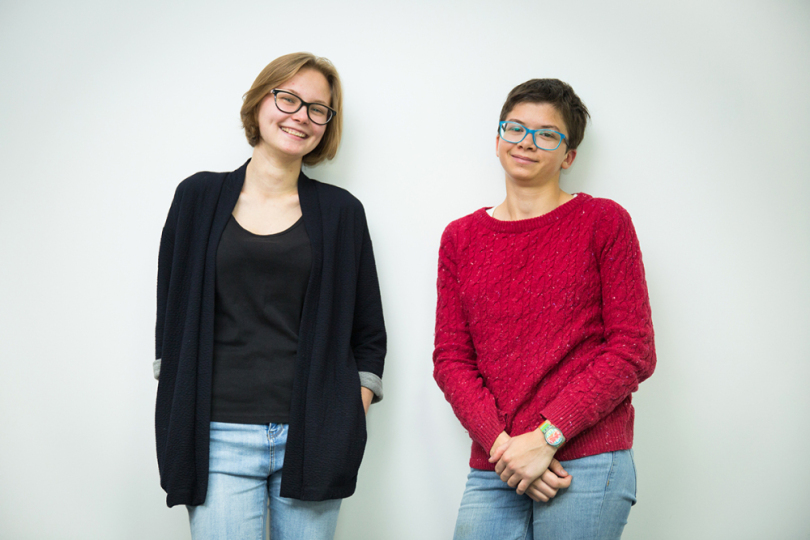
Is it possible to learn a new language well enough in just two weeks to conduct linguistic research on it? This is an entirely standard practice for linguists, according to Sasha Kozhukhar and Liza Vostokova, both students in the Linguistic Theory and Language Description master’s programme. This past summer, Sasha and Liza went on an expedition to Guatemala to study Kaqchikel, an indigenous Mayan language.

Our Summer Studying Shamans, the Mayan calendar, and the Kaqchikel Language

Our Summer Studying Shamans, the Mayan calendar, and the Kaqchikel Language
Is it possible to learn a new language well enough in just two weeks to conduct linguistic research on it? This is an entirely standard practice for linguists, according to Sasha Kozhukhar and Liza Vostokova, both students in the Linguistic Theory and Language Description master’s programme. This past summer, Sasha and Liza went on an expedition to Guatemala to study Kaqchikel, an indigenous Mayan language.

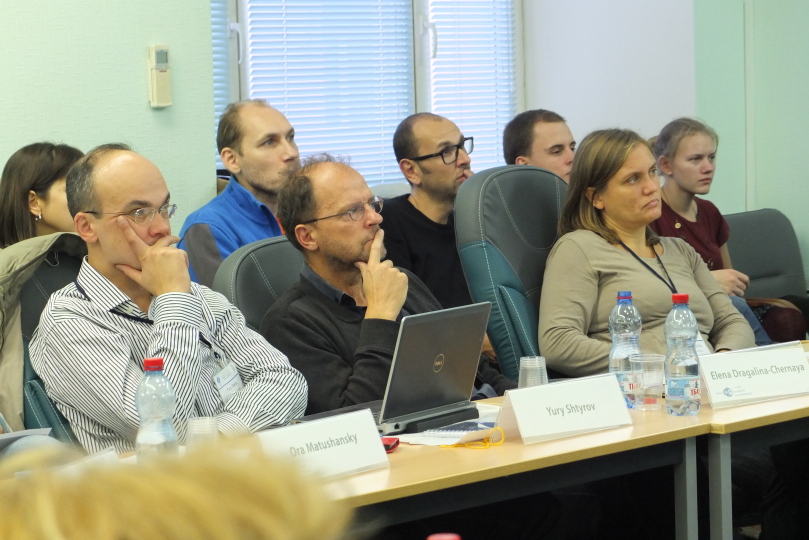
The First HSE Semantics & Pragmatics Workshop was held on 30 September and 1 October 2016.

The First HSE Semantics & Pragmatics Workshop was held on 30 September and 1 October 2016.
The First HSE Workshop on Semantics and Pragmatics took place on September 30 and October 1 in Moscow. The first HSE Semantics and Pragmatics workshop was held on September 30 and October 1 in Moscow. The workshop was organized by a Research group “Formal Philosophy”, School of Philosophy and School of Linguistics.

‘These are the People Who Will Shape the Agenda in the Humanities’

The first Moscow-Tartu School in Digital Humanities has taken place at the Leo Tolstoy House and Museum in Yasnaya Polyana. The school‘s aim is to create an interdisciplinary academic environment in which modern computer methods are applied to the study of texts. The school was organized by the HSE School of Linguistics, Leo Tolstoy House and Museum in Yasnaya Polyana, and the Department of Russian Literature at the University of Tartu.

‘Seeing’ Language through Neurolinguistics

‘Seeing’ Language through Neurolinguistics
What happens in a person’s head when they hear speech or say something themselves? How does trauma and disease impact a person’s speech capabilities, and can we really help people who have certain medical conditions? Questions like these concern the life of language in the human brain, and this is exactly what researchers in the HSE Neurolinguistics Laboratory are currently studying.

Everyone Wants to Be a Pioneer: HSE Students Study African Languages, the Mind, and Military Dictatorships

The Higher School of Economics is very serious about students getting involved in undergraduate research. For Russian Science Day, celebrated on February 8, the HSE News Service spoke with three young HSE researchers about their work and learned how the students set goals for themselves, achieve results, and move forward with what some might deem frighteningly ambitious research ideas.